
What is Palynziq?

Also known as Pegvaliase, or PAL, or PEG-PAL.
If you’ve been researching treatments for Phenylketonuria (PKU), you might have seen one of these terms. PAL, PEG-PAL, Pegvaliase and Palynziq all refer to the same core treatment method for PKU — a form of enzyme substitution therapy usually given by injection.
A Quick Reminder: What Is PKU?
PKU is a rare genetic condition where the body cannot produce enough of the enzyme phenylalanine hydroxylase (PAH), which is necessary to break down the amino acid phenylalanine (phe). Phe comes from protein in foods, and when it builds up in the blood it can damage the brain and nervous system. Traditionally, people with PKU follow a strict low-phe diet to manage levels, often with medical foods and supplements.
 Pauline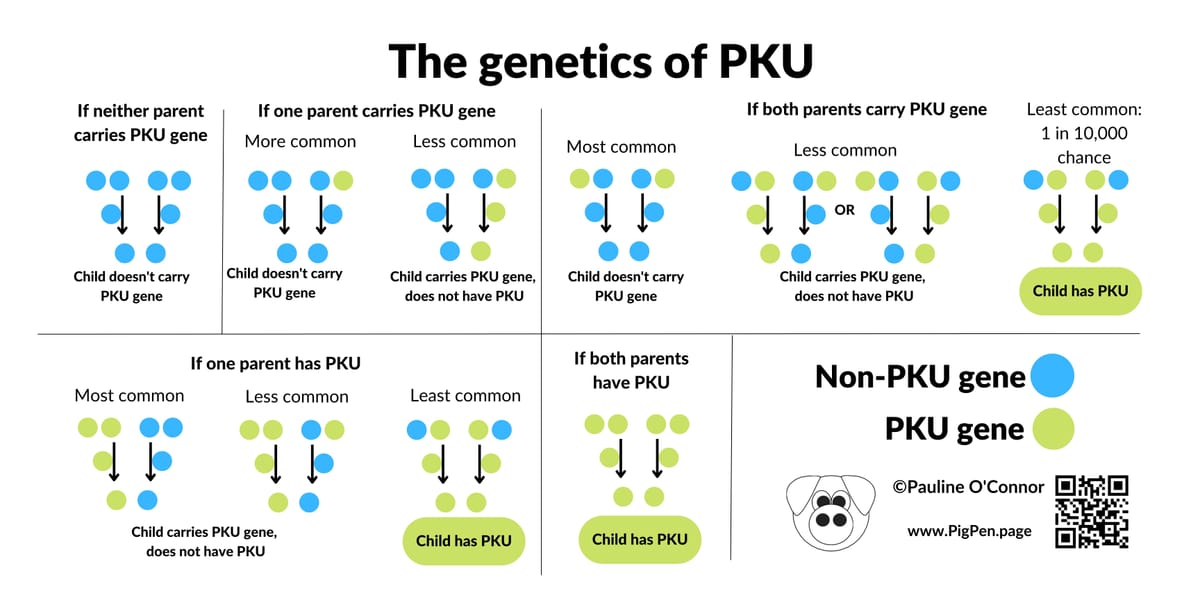
PAL: the enzyme
PAL stands for phenylalanine ammonia lyase — an enzyme found in many plants that breaks down phenylalanine into compounds the human body can easily eliminate. It functions in plants much like PAH (see above) does in humans, but via a different chemical pathway. Because PAL isn’t naturally produced in the human body, it must be given as a therapy to help reduce phe levels.
PEG-PAL: the stealth enzyme
Adding PEG (polyethylene glycol) to PAL creates PEG-PAL. PEG is a safe compound commonly used in medicines to shield proteins from the immune system. Without PEG, the body’s immune defenses would see plant-based PAL as “foreign” and destroy it before it could work. PEG acts like a disguise, helping the enzyme persist in the body so it can break down phe.
Pegvaliase and Palynziq: brand names
BioMarin has developed PEG-PAL into an injectable treatment for PKU. Initially, this was called ‘Pegvaliase’ but it is now called ‘Palynziq’. Essentially, they are brand names for the treatment PEG-PAL; in the same way that Panadol is a brand name for paracetamol.
It is worth noting that BioMarin is the same company which developed Kuvan (sapropterin) - a different treatment which can improve phe absorption in some people with PKU.
How is Palynziq used?
Palynziq is administered as an injection. The enzyme helps break down phenylalanine in the bloodstream, lowering blood levels and helping prevent the harmful effects of accumulation.
Palynziq is given in escalating doses, usually starting low and increasing over time under medical supervision. Some users have reported that it can take many months before seeing an effect. Use of Palynziq often requires regular blood phe monitoring and careful dose adjustment.
Where is Palynziq available?
Palynziq is now used widely in the US. The European Union approved Palynziq in 2019 for people aged 16 and older whose phe levels remain high (above about 600 µmol/L).
The UK is lagging behind. The UK left the EU’s centralised approval system after Brexit, so Palynziq requires a separate licence in the UK. According to the UK patient support charity NSPKU, BioMarin has not applied for a UK licence for Palynziq and currently has no immediate plans to do so. Campaigning continues to try to bring this treatment to NHS practice.
Palynziq effectiveness and side effects.
While it works in theory and in many patients, life is complicated. As noted above, PAL is a plant enzyme which is foreign to the human body. Even with the stealth coating offered by PEG, it still causes problems during treatment. It has side effects similar to those experienced when the human immune system fights a foreign chemical.
Potential benefits of Palynziq:
- Reduces blood phe levels for many people who struggle to control phe through diet alone.
- Some studies suggest improvements in neurocognitive and mood symptoms with sustained use.
Common side effects of Palynziq:
- Injection site reactions
- Joint pain
- Allergic responses
- Suggestions that it can take time (weeks/months) to work.
Where Palynziq Fits in PKU Care
Palynziq represents one of the few non-diet medical therapies for PKU and is considered when dietary and other options (like sapropterin/Kuvan) are insufficient. Patient support organisations stress the importance of access to treatment choice alongside specialist care, education and ongoing research into new therapies.
Looking Ahead
Research into PKU treatments continues, with ongoing clinical studies exploring long-term outcomes, optimal use, and combination therapies including enzyme approaches and gene-based techniques. As understanding grows and global regulatory landscapes evolve, access and options may expand further..
Member discussion