
Lived Experiences of Genomic Testing
Our Voices, Our Stories
Genomics and the UK Sapropterin rollout
Genomic testing is a rapidly evolving field, with new discoveries and treatments emerging at an unprecedented pace. While the clinical and scientific aspects are often the focus, it’s essential to remember that each advancement has profound, life-changing impacts on real people.
In a recent presentation for NHS genomics staff, I shared my personal journey with genomic testing as an adult living with Phenylketonuria (PKU). The feedback was overwhelmingly positive, with attendees describing the session as “incredibly insightful” and “fantastic.” Today, I want to share some of those insights with you, and explore why patient stories are so vital in shaping the future of genomic medicine.
Introducing PKU
As with any rare condition, assuming a healthcare working is familiar with PKU is a mistake. Occasionally, I have come across someone in a healthcare setting who knows of PKU, or recognises the name. Even then, an explanation is required.
I always explain that PKU is a rare genetic condition which is usually diagnosed with PKU at birth, thanks to newborn screening. And the incidence in the UK is about 1 in 10,000 babies. For over 70 years, the only treatment has been a severely restricted diet, limiting protein intake to just 15% of what most people eat. This is not just challenging; it’s exhausting and socially isolating.
For more on the genetics of PKU, read The Genetics of PKU.
Genomic Testing: Hope and Heartbreak
When a new drug, Sapropterin, was approved in the UK in December 2021, I was filled with hope. This treatment boosts enzyme activity in some people with PKU—but only about 1 in 3 respond, depending on their inherited genomes. With over 1,000 possible mutations and 500,000 potential responses, the complexity is staggering.
I underwent genomic testing in February 2022, and was told to expect results in six weeks. The system was completely overwhelmed, with many other sharing my hope and the NHS recovering from COVID-19. Seven months after testing, I learned I was “unlikely” to respond. After 40 years of waiting for an alternative, the news was devastating.
For a deeper dive into my experience, see Sapropterin Trial: Part 1.
Buy me a cuppa ☕ — your support helps keep this blog free, and helps to me write about PKU, brain injury & mental health.
The Emotional Toll of Ambiguity
The process was not just slow—it was inconsistent. My clinic said no drug trial was possible, while others with similar results were offered trials. This inconsistency created a sense of unfairness, turning sadness into anxiety and rage. These emotions could—and should—have been avoided with better communication and consistency.
Lessons for Genomic Testing Programmes
My experience highlights critical lessons for genomic testing:
- Consistency is key: A unified approach to ambiguous results is essential.
- Communication matters: Patients deserve clear, timely updates.
- Data transparency: My genomic data was not reported to the BIOPKU database, which could have helped others access treatment.
Looking Ahead: The Power of Patient Voices
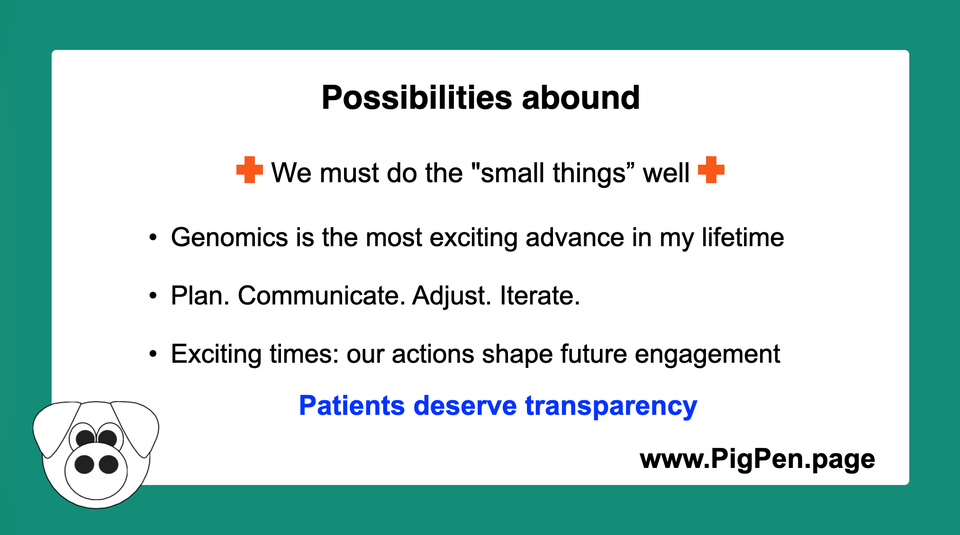
Genomics is the most exciting advance in my lifetime. But to realise its potential, we must do the “small things” well: plan, communicate, adjust, and iterate.
Patients deserve transparency and a seat at the table.
By sharing our stories, we can shape future engagement and ensure that genomic testing is not just scientifically advanced, but also humane and patient-centred.
What are your experiences with genomic testing? Share your story in the comments or get in touch.
 Pauline
Member discussion